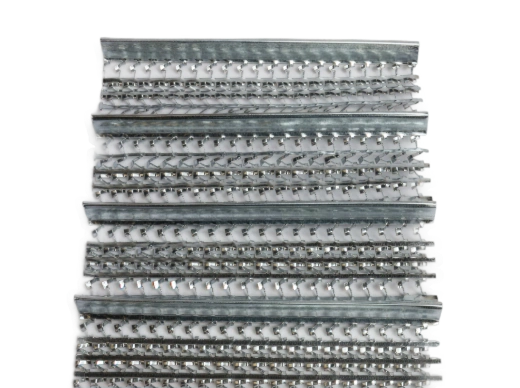

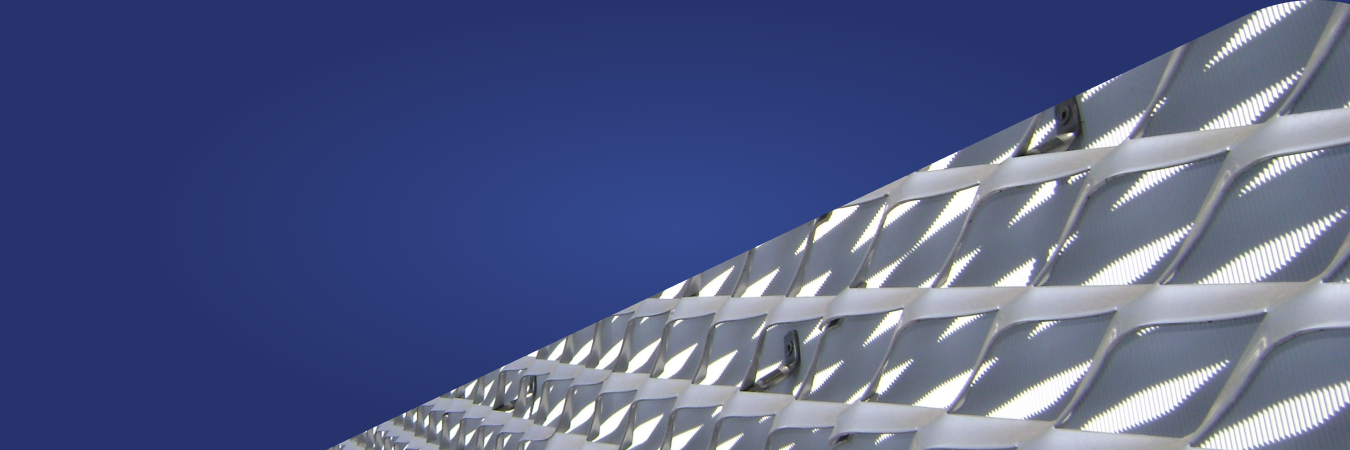
Rib Lath is a versatile metal lath stiffened by the longitudinal ribs. The furring design of the mesh provides efficient plastering background for the construction of partition, suspended ceiling and refurbishment works.
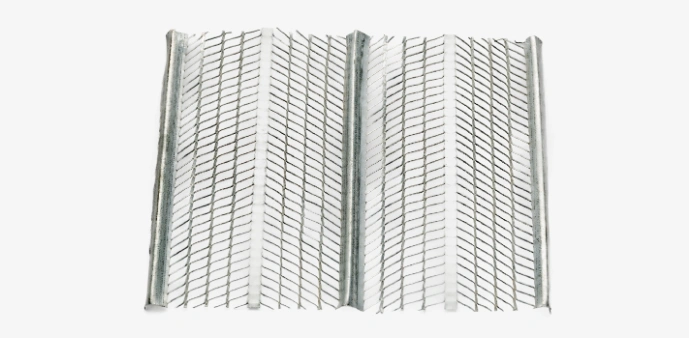

| Galvanized Steel | Stainless Steel | Weight kg/m² | Rib Depth (mm) | Width/Length (mm) |
|---|---|---|---|---|
| MRBL1.4 | MRBLS1.4 | 1.48 | 10 | 600/2500 |
| MRBL1.8 | MRBSL1.8 | 1.84 | 10 | 600/2500 |
| MRBL2.2 | MRBLS2.2 | 2.22 | 10 | 600/2500 |
Rib Lath should be fixed with apexes of Ribs against the wall, edge ribs of sheet nesting into each other should be wire-tied every 150mm and ends fixing should be used at sufficient intervals to hold the lath firmly in position.
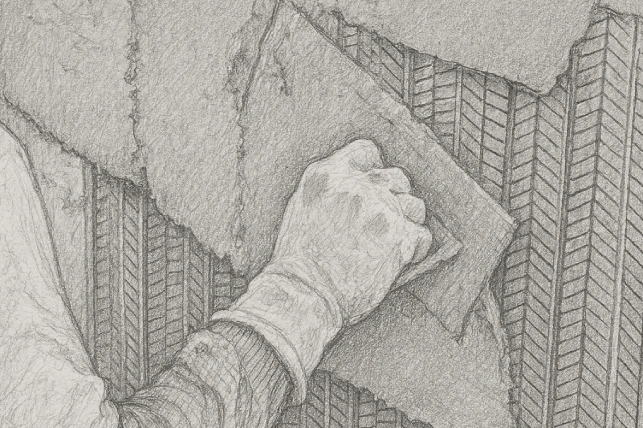
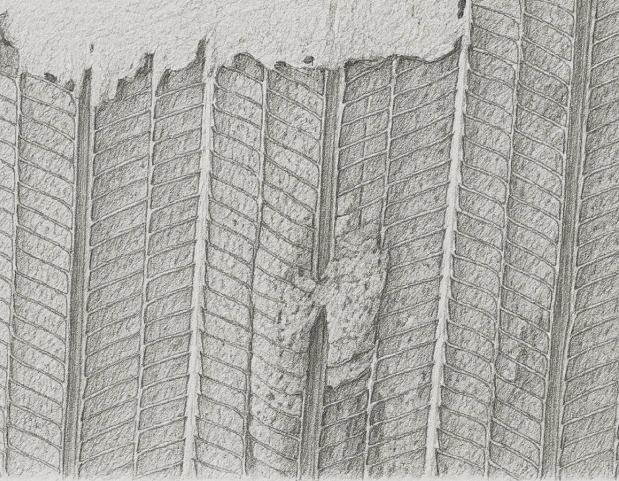
Rib lath is fixed so that the tip of the rib is placed against the supporting background. The rib of the sheet should run at right angles to any supports. Ensure that sheets are overlapped by a minimum of 50mm end to end and by 25mm width ways and that the ribs are nestled together.
Rib Lath is fixed at each rib to metal supports using 1.63mm galvanized or stainless steel tying wire. When joining Rib lath sheets overlap the edge ribs and tie the edges with 1.22mm tying wire and 150mm center.
Rib Lath is fixed at each rib to timber supports using Plaster nails or staples. Ensure that compatible corrosion resistant fixings are used, i.e. Do not use galvanized fixings for stainless steel.
Rib Lath can be fixed to a solid background using a suitable fixing which holds the ribs firmly against the background. Where sheets are installed vertically, fixings should be positioned through all ribs at 600mm centers to ensure adequate stability