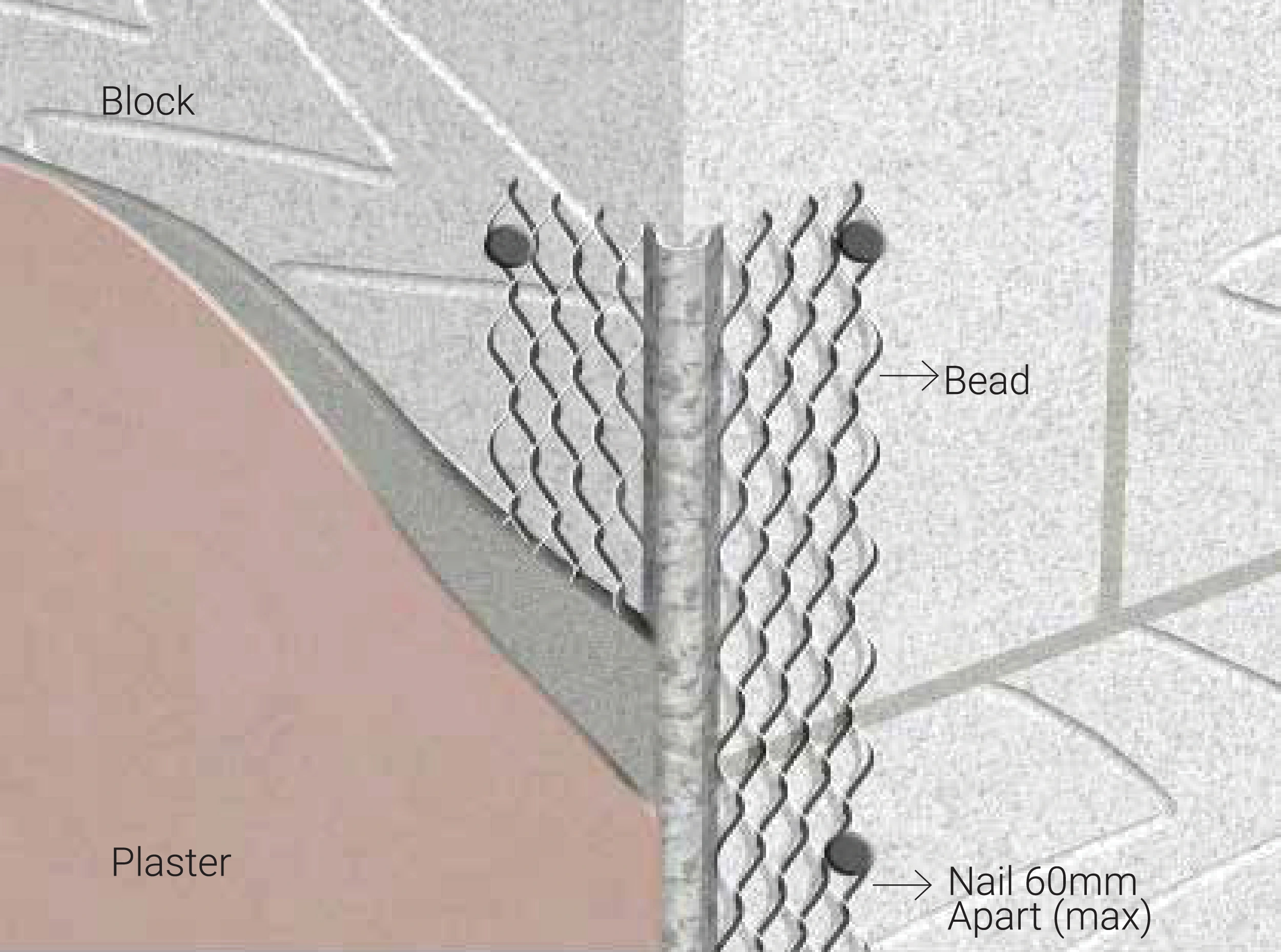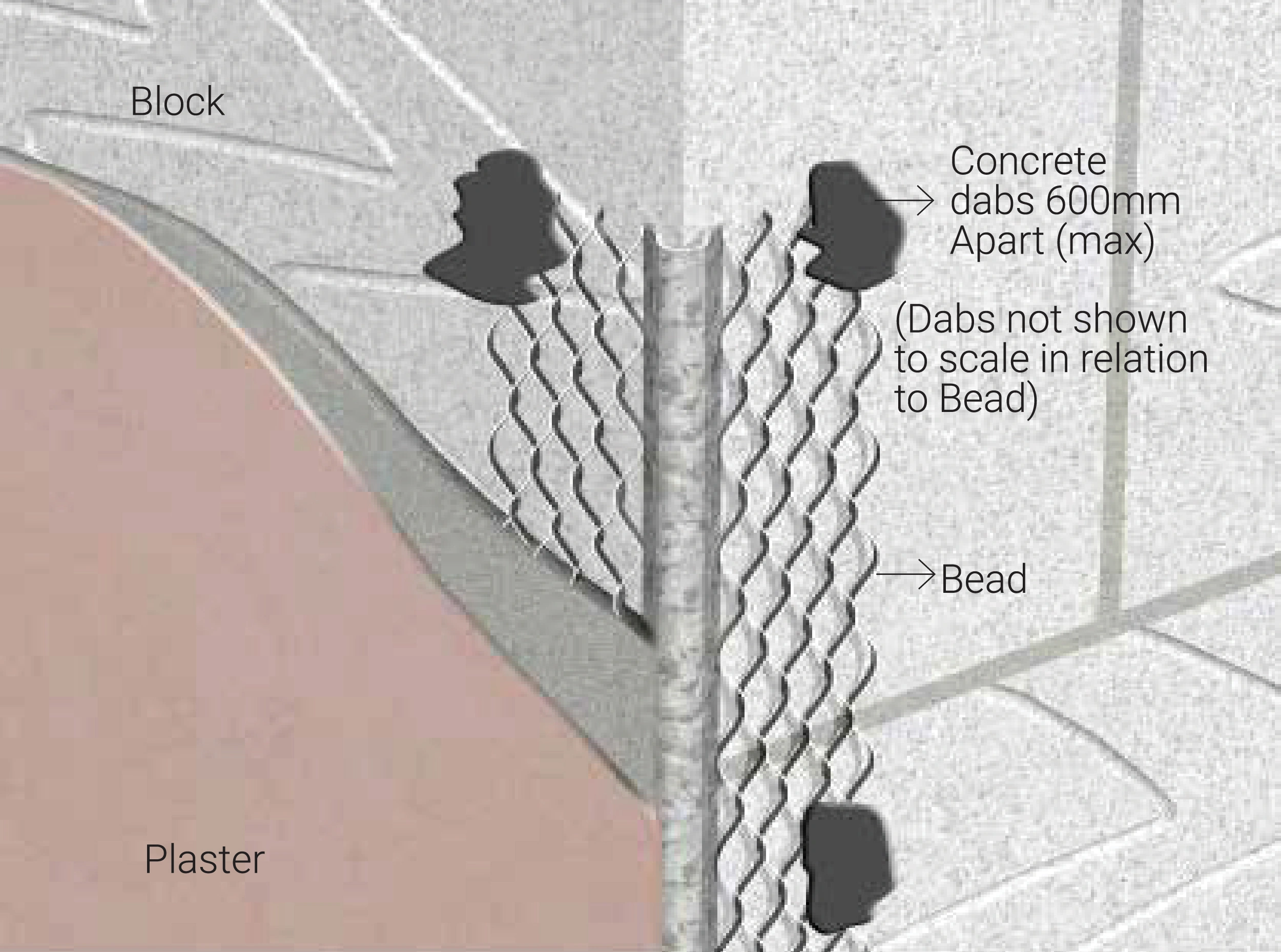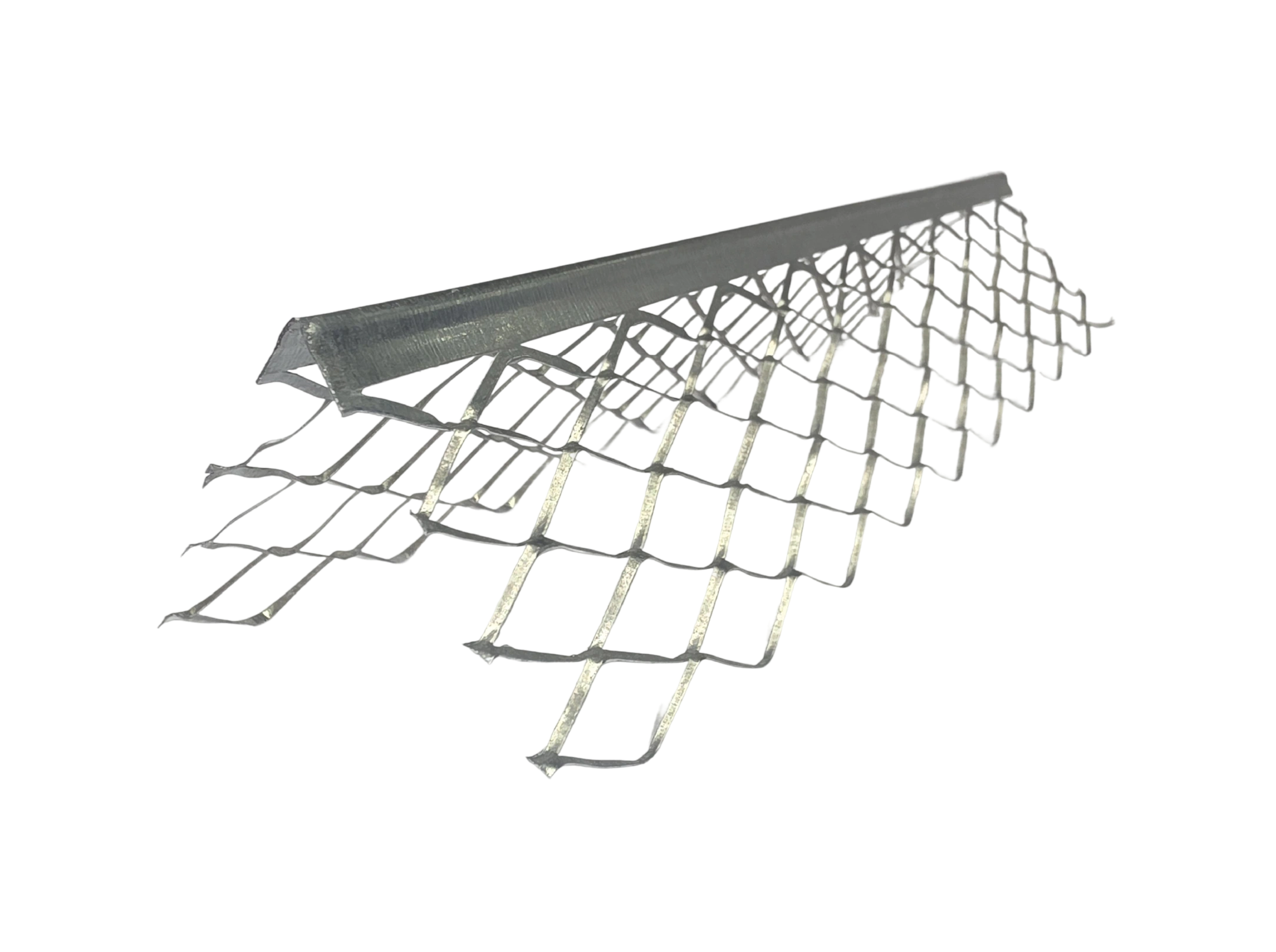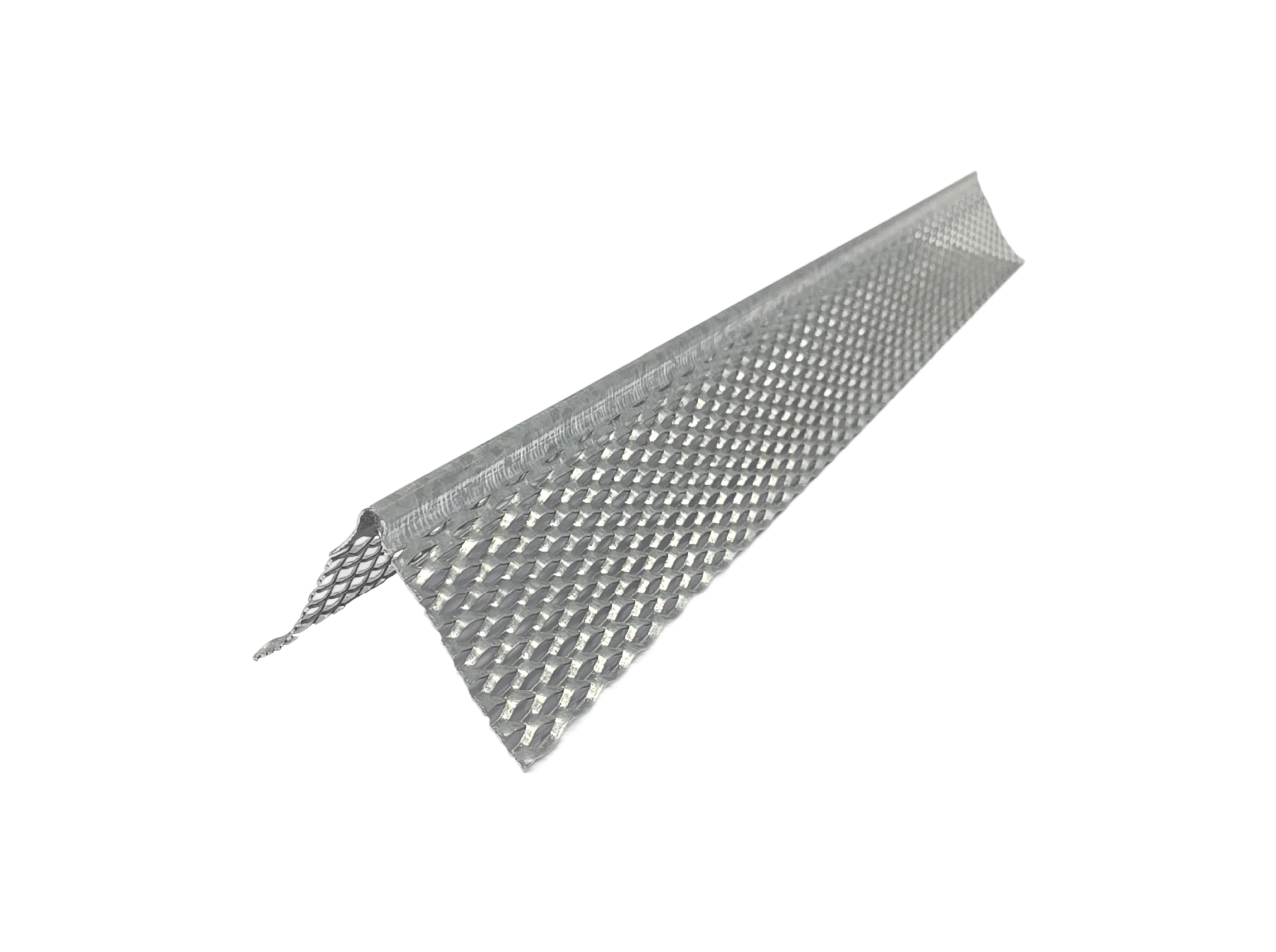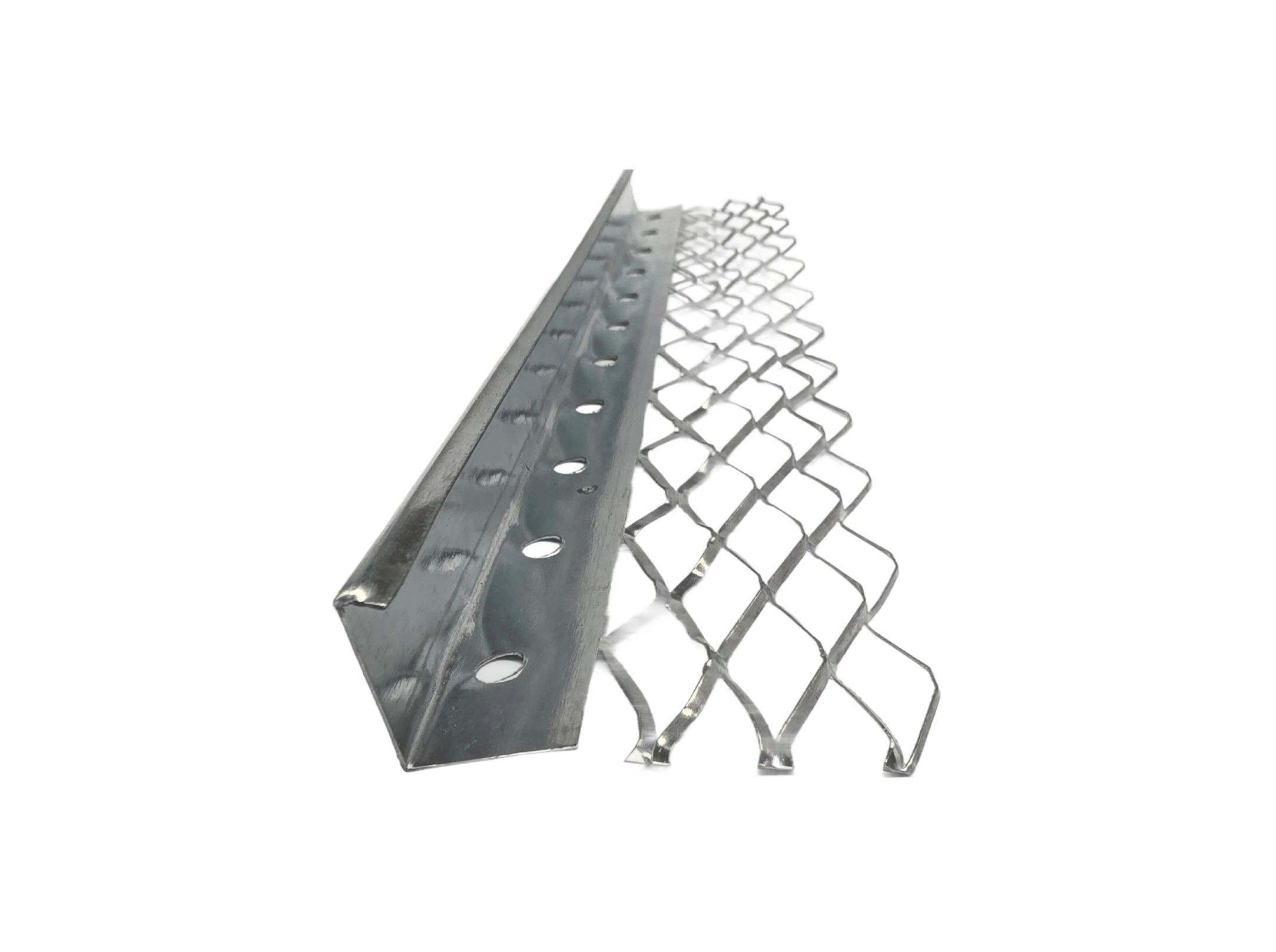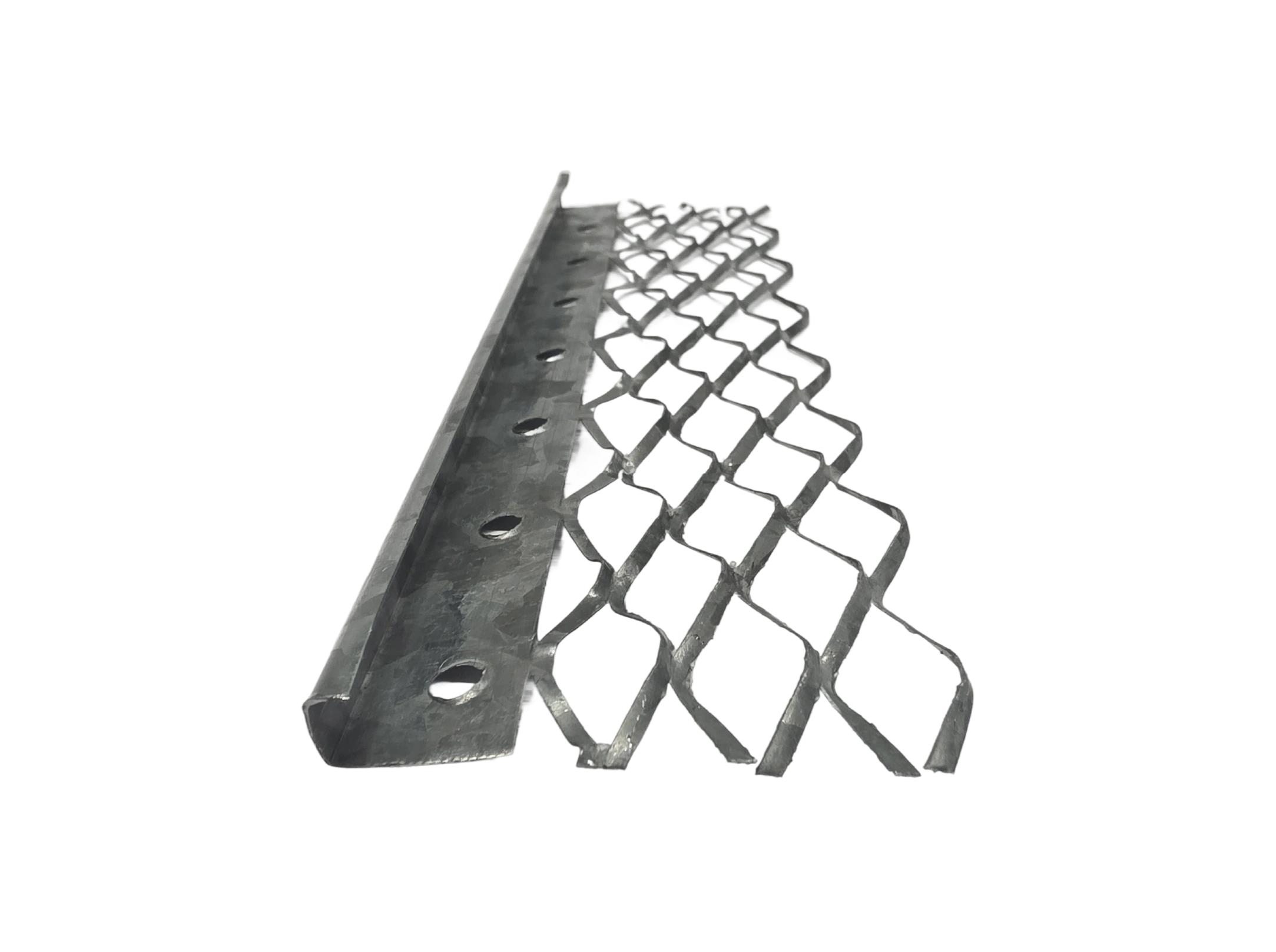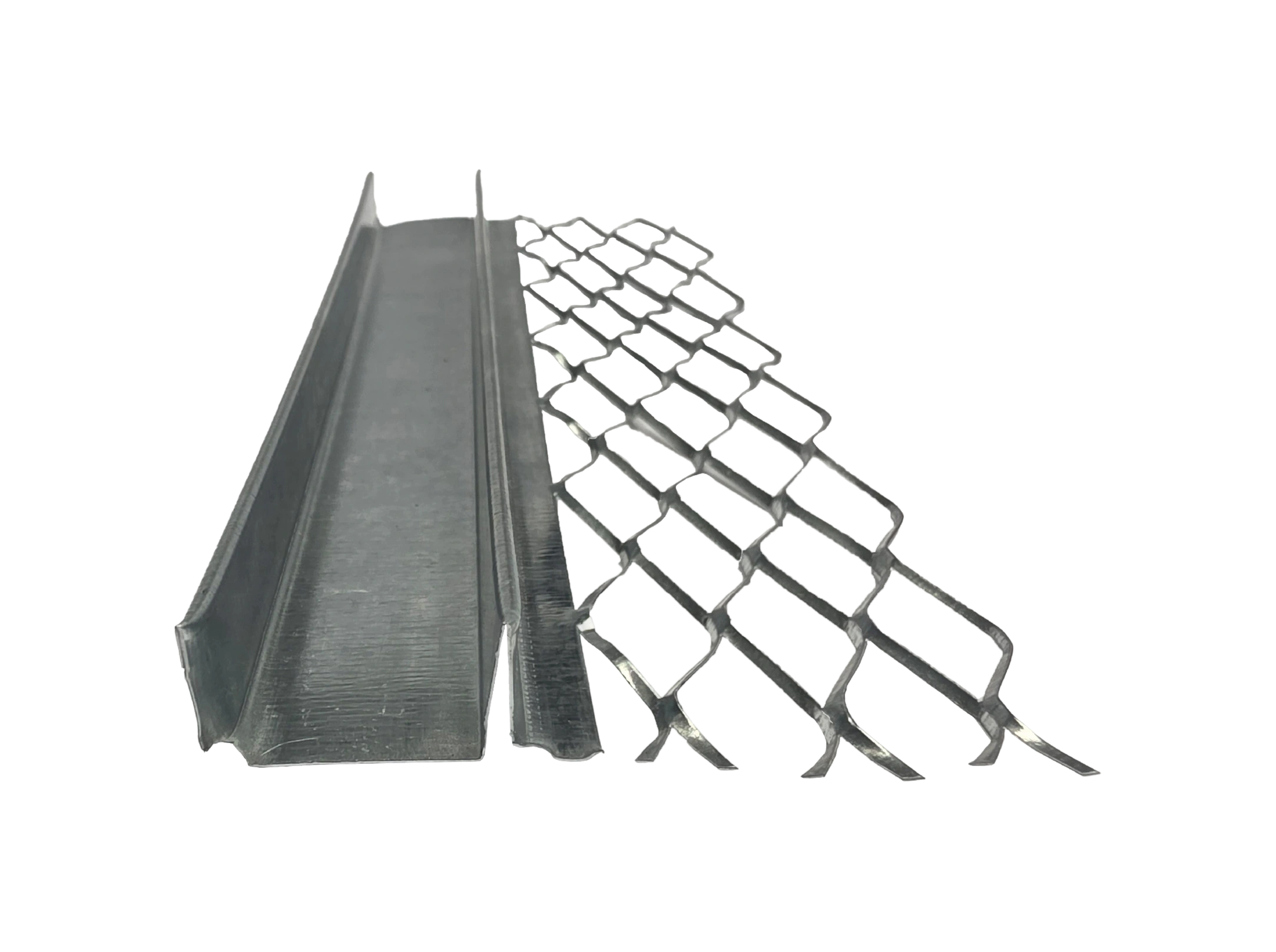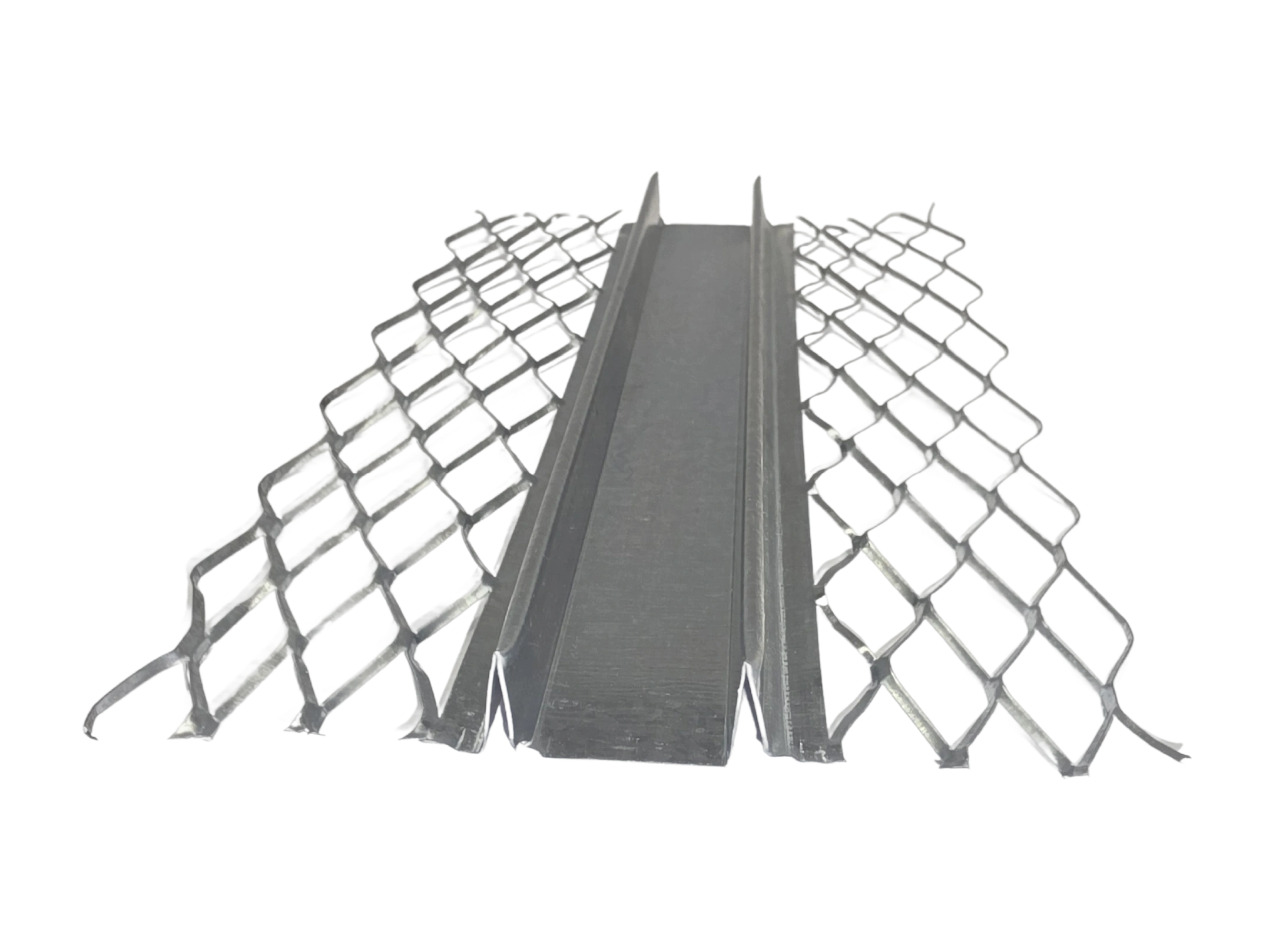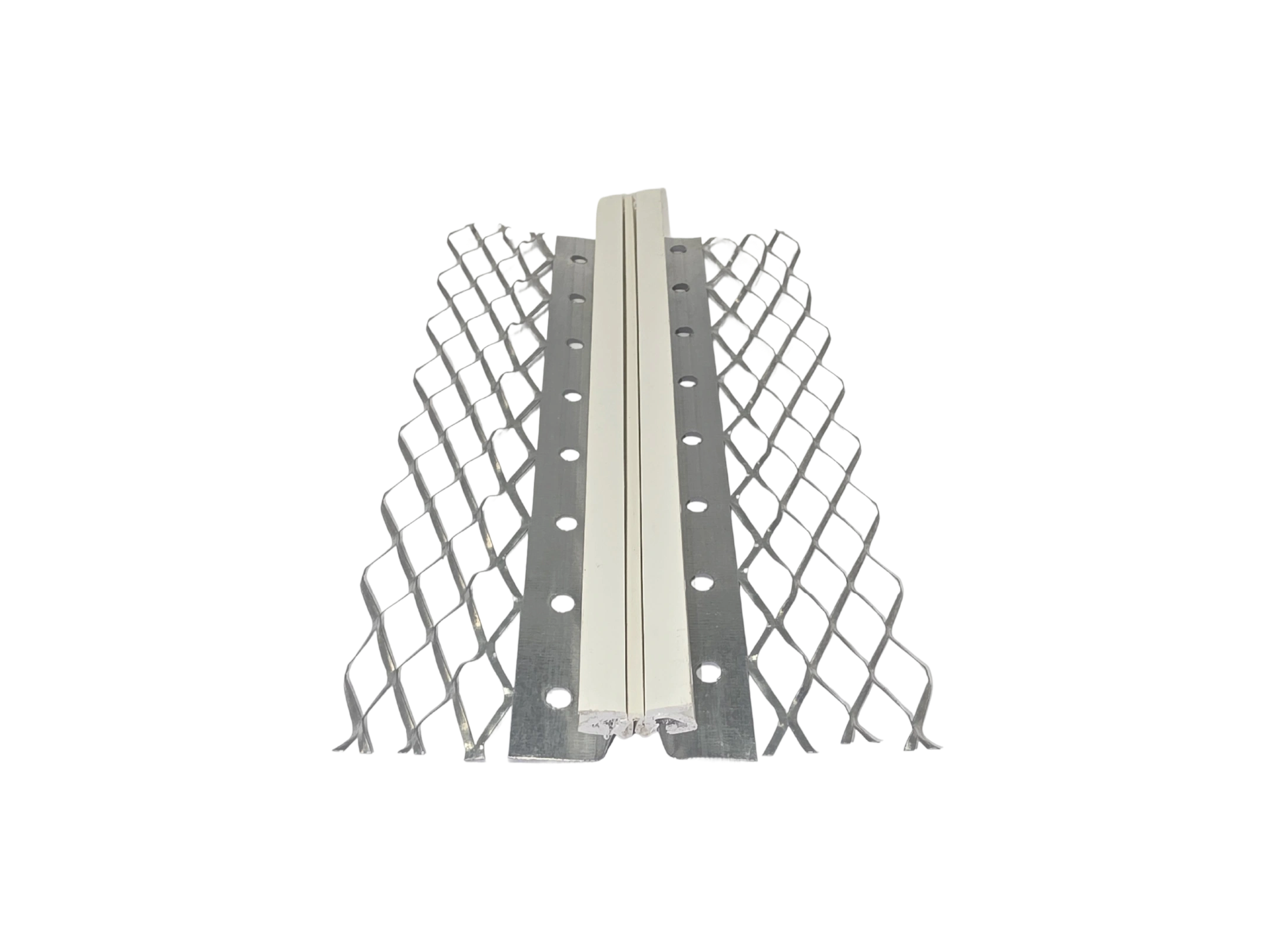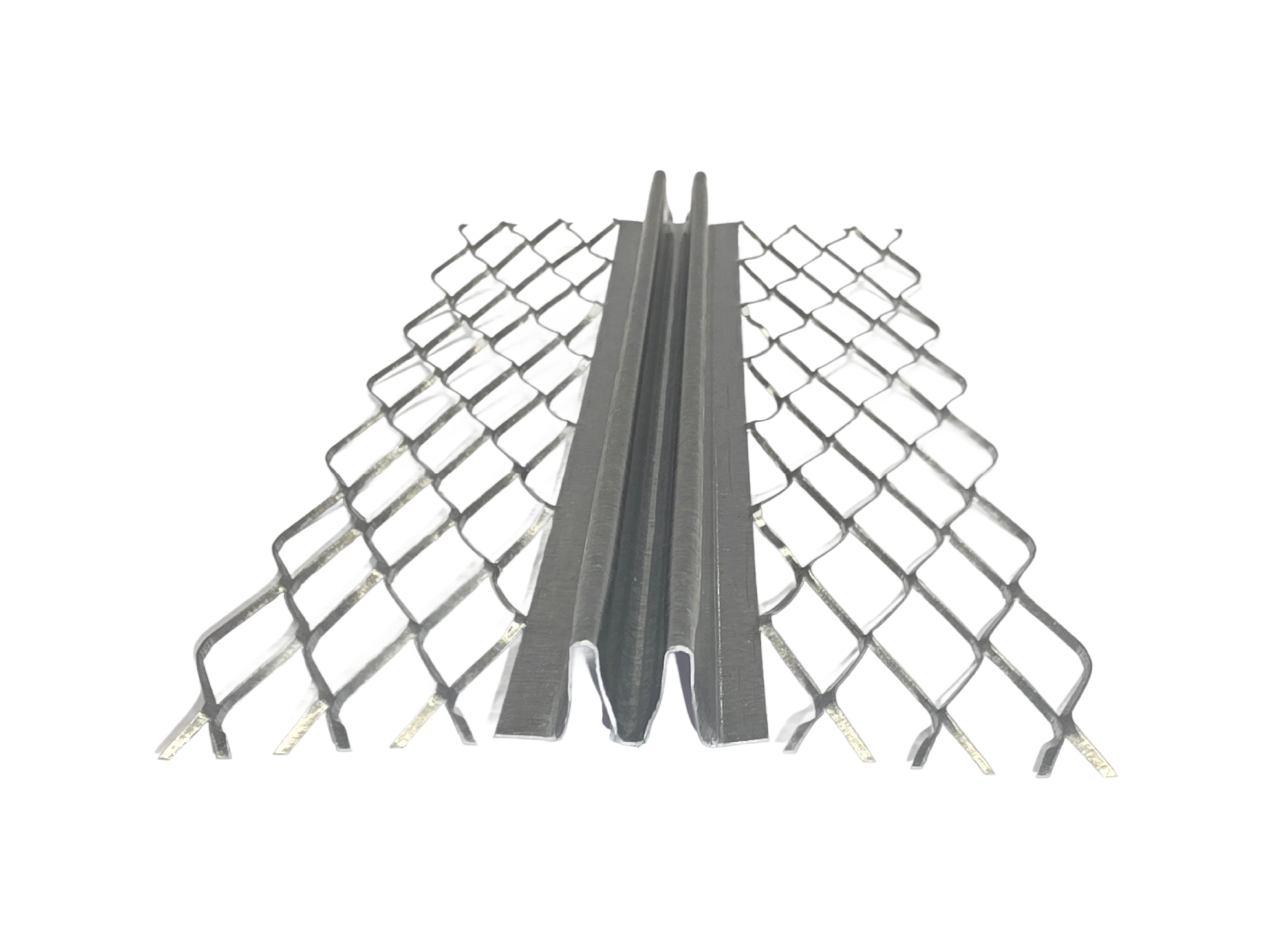


The most appropriate METEX bead should be chosen to suit the application required plaster depth and the desired finish of the work. The application and installation of METEX beads should be in accordance with BS 5492:1990 code of practice for internal plastering and BS 5262: 1991 Code of Practice for external renderings.
Plaster Beads have become an indispensable part of plastering operations. Use of the appropriate beads greatly reduces the time in forming sharp corner joints, end stops and other details. Moreover, they offer protection and reinforcement to vulnerable plaster Edges.
Beads may be trimmed to length using tin man's shears across the wings and a fine-toothed saw across bead noses. Use one of the following methods to fix METEX Angle Beads and Plaster Stop Beads.